🔥 UP TO 51% OFF BUNDLES | 🚚 FREE DELIVERY ON ORDERS RS. 1999+

Glycolic Acid Face Wash Guide for Oily Skin
Discover how a glycolic acid face wash controls excess shine, clears trapped sebum, and refines pores without stripping your skin barrier.
Dr. Farzeen Mansha
7/18/20265 min read
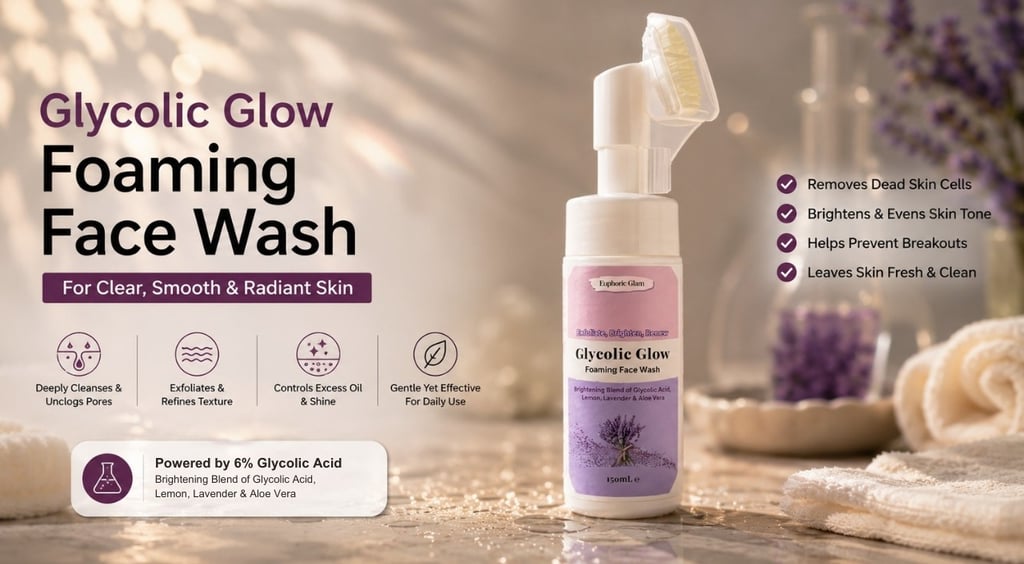
The Definitive Science-Backed Guide to Using a Glycolic Acid Face Wash for Oily Skin
Excessive shine, enlarged pores, and a constant battle against midday grease are classic hallmarks of hyperactive sebaceous glands. When your skin overproduces oil, it does not just sit on the surface—it alters how your skin exfoliates naturally.
Many people turn straight to aggressive scrubs to strip away the oil, but mechanical scrubbing often triggers a rebound effect, causing the skin to produce even more sebum. The modern, dermo-cosmetic solution lies in chemical exfoliation via a precisely formulated rinse-off cleanser.
A glycolic acid face wash is highly effective for oily skin because it rapidly breaks down dead surface skin cells that trap excess sebum. By accelerating cellular turnover and keeping pores clear of debris, this Alpha Hydroxy Acid (AHA) reduces greasy shine, refines skin texture, and prevents congestion.
The Sebaceous Science: How Glycolic Acid Controls Excess Shine
To understand why glycolic acid works so well for oily skin, we have to look at a process called desquamation—your skin’s natural shedding mechanism.
In normal skin, dead cells fall off effortlessly. However, when you have an overabundance of oil, these dead cells act like bricks, and the excess sebum acts like wet cement. They glue themselves together, creating a thick, suffocating layer over your epidermis. This layer traps oil underneath, making your skin look dull and triggering microcomedones (the earliest stage of a clogged pore).
Glycolic acid is an Alpha Hydroxy Acid derived from sugarcane. It possesses the smallest molecular weight of any AHA, allowing it to penetrate the upper layers of the skin efficiently.
Once applied, it targets the desmosomes—the microscopic cellular glue holding those dead skin cells together. By dissolving these bonds, glycolic acid sweeps away the "bricks," allowing the trapped sebum underneath to flow freely out of the pore rather than becoming congested. While it doesn't physically dry up the oil glands the way an ingredient like retinoids might, it completely removes the physical barriers that turn normal oil into a congested breakout.
The Formulator's Balance: Ideal pH and Concentration Rationale
When shopping for an acid cleanser, looking at the ingredient list is only half the story. As formulators, we look at two critical numbers: concentration and pH. Together, these determine the "free acid value"—the actual amount of active, un-neutralized acid available to work on your skin.
The 5% to 8% Strength: For resilient, oily skin types, a concentration between 5% and 8% is the sweet spot. Anything less than 5% won't efficiently cut through the heavy layer of surface lipids. Anything higher than 8% in a daily rinse-off product increases the risk of over-stripping, which shocks the skin into producing more oil to defend itself.
The pH Rationale: Glycolic acid has a pKa (the pH at which the acid is exactly 50% active and 50% neutralized) of 3.83. If a face wash has a pH of 5.0, the acid is mostly neutralized and rendered inert. For the glycolic acid to be bioavailable, the formula must sit strictly between a pH of 3.5 and 4.0.
A rinse-off cleanser is an ideal delivery system for daily chemical exfoliation. It gives the acid enough contact time to break down surface debris without the prolonged exposure of a leave-on serum, which can sometimes cause irritation on vulnerable areas of the face.
🧪 Formulator's Insight:
Advanced Surfactant Selection
Formulating our Glycolic Glow Foaming Face Wash required balancing acidic bio-availability with lipid barrier preservation. Traditional anionic sulfates like SLS become highly aggressive in low-pH environments, stripping essential lipids and triggering reactive seborrhea. To prevent this, Euphoric Glam completely avoids harsh sulfates, instead utilizing a matrix of plant-derived, non-ionic surfactants that maintain a dense, luxurious foam profile without disrupting the stratum corneum. By pairing these gentle cleansers with advanced skin-conditioning polymers, we form a protective micro-shield that buffers the acid’s activity—leaving the skin thoroughly purified, calm, and structurally hydrated without any tight, squeaky aftermath.
The 60-Second Method: Step-by-Step Application for Maximum Sebum Control
Using an active cleanser requires more intentionality than a basic face wash. If you apply it and rinse it off within five seconds, you are essentially washing the active ingredients down the drain. Follow this method during your evening routine:
The Activation Prep: Dampen your skin with lukewarm water. Avoid hot water, which strips natural lipids and causes inflammation.
The 60-Second Rule: Dispense a dime-sized amount of the cleanser. Massage it into your skin using gentle, upward circular motions for a full 60 seconds. This provides the free acid with adequate contact time to interact with the stratum corneum and dissolve cellular bonds.
The T-Zone Focus: Concentrate your movements on the forehead, nose, and chin (the T-zone), where sebaceous glands are largest and most active. Keep the application brief and gentle around the more delicate cheek and eye areas.
The Hydration Balance: Rinse thoroughly with cool water. Pat dry, and immediately follow up with an oil-free, non-comedogenic humectant (look for ingredients like Hyaluronic Acid or Glycerin ). Locking in lightweight moisture signals to your sebaceous glands that the skin is fully hydrated, preventing a spike in oil production. An example of such humectant is The Hydra Glow Serum.
Routine Architecture & Ingredient Conflicts
Because glycolic acid increases your skin's cell turnover, it leaves your skin more vulnerable to UV damage. Applying a broad-spectrum SPF 30 or higher every morning is non-negotiable.
To prevent skin barrier degradation, manage your ingredient pairings carefully:
Do Not Pair In The Same Session: Avoid using your glycolic acid wash at the exact same time as leave-on Vitamin C (L-Ascorbic Acid), Retinol, or prescription retinoids. Layering low-pH formulas or combining multiple high-turnover actives in one evening can lead to redness, flaking, and a compromised moisture barrier.
The Ideal Routine Setup: Use your glycolic acid wash in the evening. If you use a Retinol serum, alternate nights—use a gentle, hydrating cleanser on Retinol nights, and your glycolic acid wash on the other nights.
Search Intent FAQs
Is glycolic acid face wash good for oily skin?
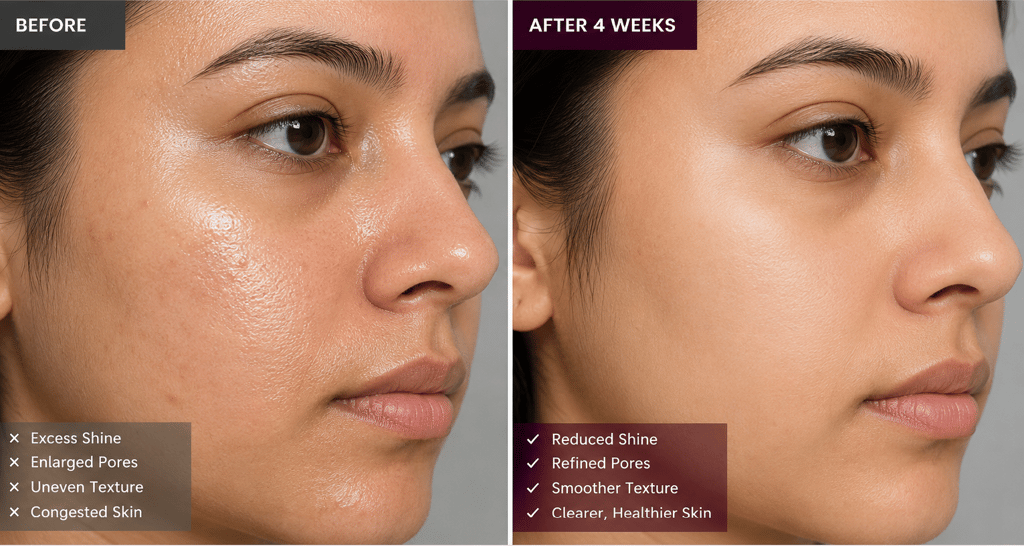
Yes. Glycolic acid is highly beneficial for oily skin because it addresses the core issue of surface congestion. By shedding the top layers of dead skin cells that lock excess sebum inside the pores, it visibly minimizes the appearance of enlarged pores, eliminates rough texture, and keeps the complexion looking clear and fresh rather than greasy.
Which is better for oily skin: salicylic acid or glycolic acid?
It depends on your primary skin goal. Salicylic Acid is an oil-soluble Beta Hydroxy Acid (BHA) that penetrates inside the pore lining, making it a common choice for active, inflammatory acne. Glycolic Acid, on the other hand, is a water-soluble Alpha Hydroxy Acid (AHA) that works intensely on the skin's surface to sweep away the dead cell mass that traps oil in the first place, making it the gold standard for treating dullness, rough texture, and stubborn post-acne marks.
The Euphoric Glam Approach: If your primary struggles are midday grease, rough skin texture, and a dull complexion, starting with a surface-clearing AHA is highly effective. Our Glycolic Glow Foaming Face Wash is specifically engineered to dissolve the cellular glue holding dead skin down, allowing excess sebum to escape freely before it can oxidize into blackheads. It delivers the deep, texturizing reset oily skin needs without the irritation of layering multiple heavy acids.
Is a higher concentration like glycolic acid 6% safe to use daily?
For resilient, naturally oily skin, a 6% rinse-off glycolic acid formula is safe for daily or alternate-night use once your skin is acclimated. Because it is rinsed off rather than left on the skin, the irritation potential is drastically lower. However, you should always introduce it gradually—starting 2 to 3 times a week—and stop immediately if you notice signs of skin tightness, burning, or flaking.
Discover luxurious, magical skincare crafted ethically for you.
Get in Touch
Stay Updated
+92 333 0409475
admin@euphoricglam.com
NIC, Faisalabad
© 2026 Euphoric Glam (Private) Limited.
SECP CUIN: 0323848. All rights reserved.
Help & Support